Why CTV Deserves the Lead Role in Your 2026 Festive Season Plan
.jpg)


₹60,000 crore GMV. That's what Indian e-commerce generated in just the first 11 days of festive 2025, a season that opened with Navratri and ran at 3.5x business-as-usual pace. (Redseer) This year, the overall season is projected to go even bigger: ₹1.5–1.55 lakh crore in online GMV, up 25–29% vs 2025. (Datum Intelligence)
Every brand wants a slice of that pie. Problem is, most of the budget chasing it still goes to whichever channel gets the last click. Connected TV, meanwhile, gets shoved into the "brand building" drawer, on the assumption that Indians tune a TV ad out the second it airs.
Except, that's not really what's happening anymore. Indian shoppers have been behaving differently for a while now, and 2026 is turning it up a notch. Decisions are getting made more deliberately, and mobile doesn't get the full credit. The biggest screen in the living room is doing real work in what gets bought and what gets dropped.
First, let’s start with what consumers are eyeing this season.
What are Indian shopper buying this festive season 2026?
72% of Indian households are walking into this festive season ready to spend more, and nearly half are planning a double-digit jump. But that growth's coming from bigger, more considered purchases, not more impulse buys. Affordable EMI is what's actually driving festive purchases in 2026, ahead of any discount. (Datum Intelligence)
That shift shows up in what people plan to buy. Fashion and apparel, home décor and furniture, and electronics and gadgets lead on purchase intent. (Hansa Research) Fashion is the volume play: frequent, faster, and quick to respond to a festive nudge. Décor, furniture and electronics are a different kind of purchase, typically powered by EMIs.
Jewellery sits firmly in that second camp, and it looks like a laggard on raw intent, until you look at Dhanteras. Last year, Dhanteras alone drove ₹85,000 crore in jewellery sales over two days. Add this year's overlapping wedding season, and the category has plenty of reasons to sell that have nothing to do with a discount. (Datum Intelligence)
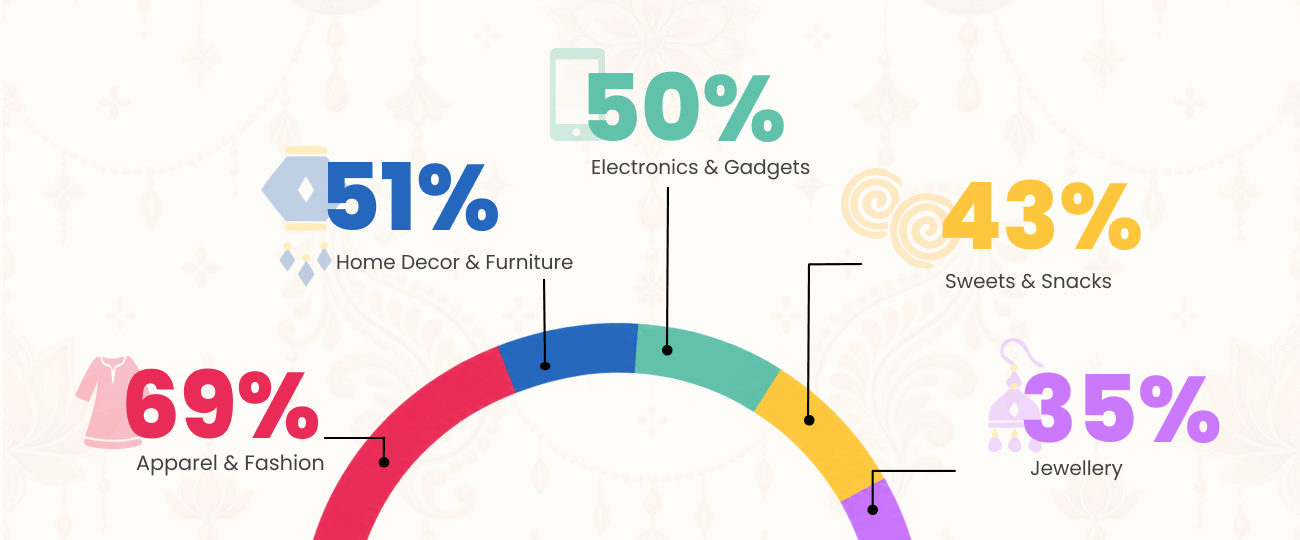
Put together, the season splits into two kinds of shoppers. One is ready to buy at a good moment. The other is researching, comparing and running the math before committing. The second group drives the big-ticket GMV, and its decisions need room: room to see the product properly, understand the offer clearly, and come back to it repeatedly before buying.
This raises the real question for media planners: where is that room, and which screens are shaping those decisions?
Why does CTV matter for festive purchase decisions?
CTV combines reach and attention, exactly what considered decisions need. Why? Because that’s where ads get looked at, not scrolled past. CTV hit 166 million monthly viewers in India in Q1 2026, up 23% year-on-year. (Kantar) It also earned an average of 58.9 Attention Units in Q2 2025, ahead of linear TV, online video and display. (Mediasmart)
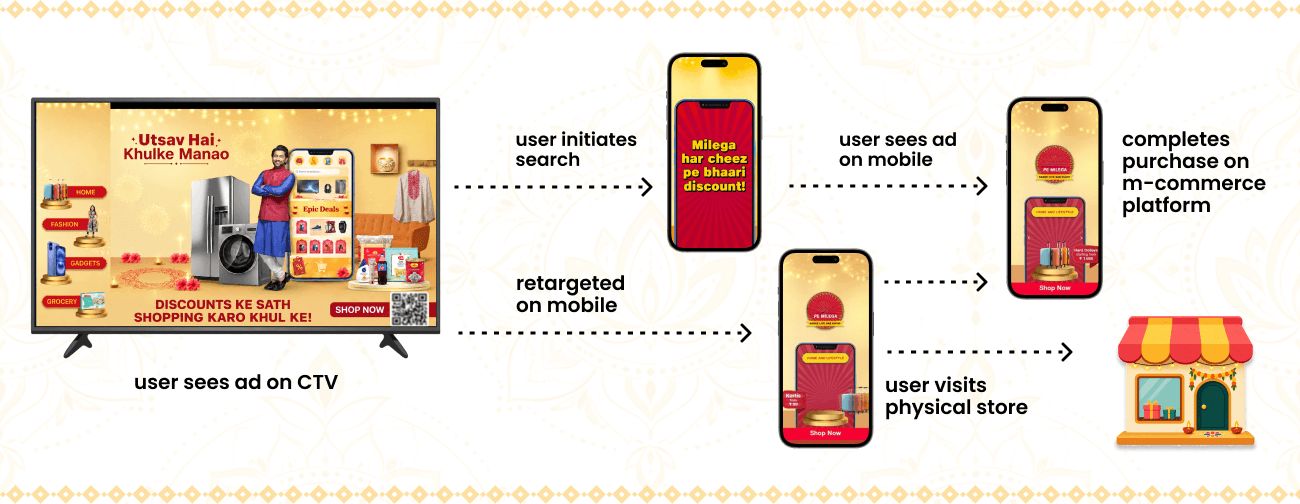
But the big screen rarely runs solo. For example, during cricket matches, 80% of viewers use their phone as a second screen, as per mCanvas’ Cricket Season 2026 Playbook; and festive viewing isn't likely to be any different. The phone is where high attention turns into action: a QR code baked into the creative, or the brand name typed straight into search, minutes after the ad airs. Both are fast-becoming standard moves for D2C brands stitching CTV exposure to a mobile conversion. (AgencyReporter)

The Online-to-Offline Bridge: Can CTV drive in-store footfall?
The journey doesn't always end online. 65% of shoppers research online and then buy in a physical store. (Datum Intelligence) For jewellery, furniture and durables, the showroom is often the last stop. A media plan that only credits the final click misses the screens that got the shopper there.
That's where footfall attribution comes in. By matching CTV-exposed households, and the mobile devices linked to them against anonymised store-visit data, brands can see whether people who saw the ad walked into a store and compare them against a similar group who didn't. The result is a measure of incremental visits: the showroom traffic CTV actually drove, not just the traffic that would have shown up anyway.
Everything else about festive discovery is getting more scattered, across YouTube creators, marketplace homepages, quick-commerce apps and AI chatbots. That's exactly why CTV matters more, not less. When every other touchpoint is a split-second scroll, CTV is one of the few places a brand gets full-screen, lean-back attention, and a chance to set the story every other touchpoint follows up on.
How Brands Should Plan for Festive Season 2026
- Make CTV the hero of your festive media plan: Treating CTV as the ancillary to a "real" campaign happening somewhere else? You’re planning for a shopper who doesn't exist. Kantar’s recent study revealed that mCanvas CTV campaigns increased both purchase intent and brand favourability by 3X when measured against global norms, which means that the living room’s biggest screen has already made the case for full-funnel impact.
- Beat the Diwali price spike: CTV can build reach and intent ahead of Dhanteras and Diwali, at rates set outside the bidding war that hits search and social as every brand chases the same inventory in the same months.
- One flight length doesn't fit every basket. Give considered-purchase categories including, jewellery, appliances, durables, a campaign long enough to build favourability before Dhanteras - not just a burst timed to a sale date. Let fast-decision, quick-commerce-driven categories run shorter, sharper flights instead of the same plan applied everywhere.
- Give the CTV story a second act: Since most shoppers don't buy on the first look/exposure, whatever gets built on CTV needs a follow-through. Cross-screen retargeting meets exposed viewers on mobile, therefore progressing the journey by prompting both recall and action.
The case for CTV isn't really in question anymore; industry-wide numbers already settle that, the biggest ones stemming from our recent global study with Kantar. But most festive plans still underuse CTV’s capabilities in driving full-funnel impact even though the technology and adoption caught up months ago. There’s merit in acting now and retiring the awareness-only POV for CTV, and we can help.
Build a full-funnel CTV strategy for this festive season. Get in touch with our team!
craft immersive ad experiences for your brand, with us!


